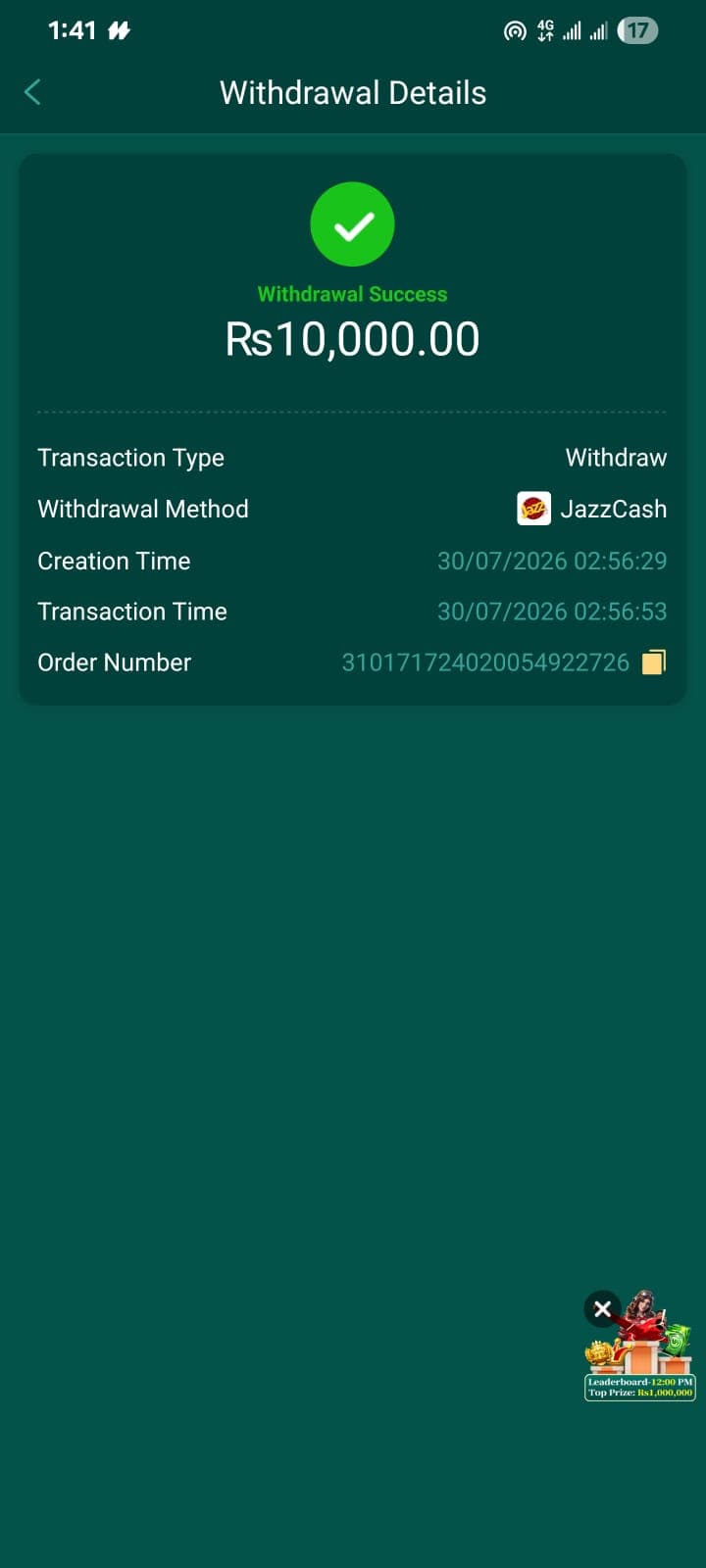
If there's one moment where trust actually gets tested with an app like this, it's withdrawal time. Anyone can look good while you're depositing money in - the real test is how smoothly it comes back out. That's exactly why "pk365 withdrawal problem" is one of the most-searched phrases around this app, and it's a completely fair thing to want clarity on before you're relying on it. Here's how this process generally works, and what's actually worth doing if yours feels stuck.
Where your balance actually lives
Before getting into withdrawals specifically, it helps to know where your balance sits day to day. Most apps in this category show your balance right in the top bar alongside a Deposit button - that's your quick-glance view of where things stand before you ever open a withdrawal screen.

How withdrawals generally work
The exact flow varies a bit by platform, but the broad shape is usually the same across apps like this one:
- Identity verification, often called KYC, is usually required before your very first withdrawal clears - have any requested documents ready ahead of time so this step doesn't hold things up unnecessarily.
- There's typically a minimum withdrawal amount, along with a specific set of supported payout methods like bank transfer or a mobile wallet.
- Processing time genuinely ranges from minutes to a few business days depending on the method and how much volume the platform is handling that day - check the app's own stated timeframe rather than assuming it should be instant just because the deposit was.
That last point trips people up more than anything else. A deposit landing instantly and a withdrawal taking a day or two isn't automatically suspicious - it's actually the normal shape for how most payment processing works, since outgoing transfers usually route through more verification steps than incoming ones.
What KYC verification usually asks for
If you haven't been through it yet, identity verification typically asks for a government-issued ID (in Pakistan, that's usually your CNIC), sometimes a selfie holding that ID for a live match, and occasionally a proof of address or a screenshot confirming the payment method belongs to you. None of this is unusual - it's the same basic verification that banks, mobile wallets, and other financial services ask for, and it exists to stop stolen accounts and money laundering, not to make your life difficult.
Do this step properly the first time if you can. Blurry photos, cropped-out corners, or a name that doesn't quite match your registration details are the most common reasons verification gets bounced back for resubmission, which adds days to the process for no good reason. A five-minute careful photo the first time saves a frustrating back-and-forth later.
Does the payout method you choose actually matter?
It can, and it's worth a moment's thought rather than picking whichever option is listed first. Mobile wallets like JazzCash tend to process faster than a traditional bank transfer for smaller amounts, since that kind of infrastructure is generally built for speed over large batch processing. Bank transfers, on the other hand, sometimes handle larger amounts more smoothly and come with a clearer paper trail if you ever need one for your own records. Neither is objectively better - it depends on how much you're withdrawing and how quickly you want it to land. If a first withdrawal via one method feels unusually slow, trying a different supported method next time is a reasonable thing to test, rather than assuming the platform itself is at fault.
Small in-app rewards vs. real withdrawals
Worth mentioning separately: features like daily sign-in bonuses add small amounts to your balance, but they're not the same thing as a withdrawal, and they're usually governed by their own separate terms - things like a minimum number of consecutive days, or a required deposit or bet amount before that bonus becomes withdrawable. If a payout looks smaller than expected, it's worth checking whether a bonus's specific conditions were actually met rather than assuming something's broken.
Your withdrawal is delayed - what to actually check
Before assuming the worst, work through this list in order. It resolves the large majority of "stuck" withdrawals without needing to contact anyone.
- Re-check that your account verification is fully complete. An incomplete KYC step is, by a wide margin, the most common cause of a stuck withdrawal - it's easy to think you finished this step when actually one document is still pending review.
- Double check the payout details you entered. A single wrong digit in an account number or wallet ID will cause a hold or an outright failure, and it's a surprisingly common self-inflicted issue.
- Confirm you're still within the platform's normal stated processing window before treating this as a genuine problem rather than just normal processing time.
- If it's genuinely past that window, raise a ticket through the app's official support channel, and keep a copy of your transaction ID and a screenshot handy - it makes the whole conversation faster on both ends.
If you're not sure which channel counts as "official" versus a fake support account pretending to be one, our support page lists the verified channels worth using, and explains why we deliberately don't publish a phone number we can't personally verify.
When a delay turns into a genuine red flag
Most delays are just processing time. But there's one pattern that's always worth taking seriously: if you're ever asked to pay an extra "release fee," "tax," or "unlock charge" before your own withdrawal will be released, stop immediately. That is not how legitimate withdrawals work anywhere, on any platform. You should never have to pay money to receive money that's already yours. This specific scam pattern shows up constantly around real-money apps precisely because it works on people who are anxious to get their funds moving and willing to pay a small amount to speed things along.
A quick word on winnings and your own responsibility
One thing worth being upfront about, since we'd rather you hear it from an honest guide than not at all: any money you withdraw from real-money gaming is still your responsibility to manage properly, including however local tax or financial regulations in your country treat that income. We're not accountants or lawyers, and this isn't tax advice - just a nudge to keep your own records (see below) and check with someone qualified if you're withdrawing meaningful amounts regularly. It's a much easier conversation to have with a professional when you've already got clean records of what came in and when.
What a realistic timeline actually looks like
It helps to walk in with reasonable expectations rather than assuming worst-case the moment a withdrawal doesn't land in the first five minutes. A well-run platform processing a verified withdrawal through a mobile wallet might genuinely take anywhere from a few minutes to a few hours on a normal day. A bank transfer, especially outside standard banking hours or across a weekend, can reasonably stretch to a day or two before it's unusual enough to raise a concern. Treat the app's own stated timeframe as the real benchmark rather than comparing it to how instant the deposit felt - those two processes simply aren't built the same way, on any platform, anywhere.
A habit that makes every support conversation faster
Keep your own simple record of deposits, wagers, and withdrawal requests - even just a notes app entry with dates and amounts works fine. If you ever do need to raise a support ticket, having your own timeline ready means the conversation moves in minutes instead of days, since you're not relying purely on memory or digging back through old notifications under pressure.
And the broader reminder worth repeating here: only ever play with money you're genuinely comfortable not seeing again. Real-money gaming carries real financial risk regardless of how smoothly withdrawals happen to be working on any given day. If you're weighing whether this app is worth trusting in the first place, our legitimacy checklist is a good next read, and our FAQ page rounds up the other questions people usually have before getting started.
PK365 APK Hub Editorial Team
We're an independent team covering PK365 downloads, login help, and account safety — not the developer, and not officially affiliated with PK365. Every guide is checked against the app's actual current screens before publishing, and updated when something changes.
Last reviewed September 1, 2026
Independent guide - not affiliated with, endorsed by, or an official representative of PK365. Always verify details against the official app and website.